
When it comes to repairing today’s most advanced vehicles, like Rivian, Tesla, BMW, and Mercedes, choosing the right auto collision repair facility isn’t just about convenience. It’s about safety, accuracy, and long-term value.
Recently, some local shops have started advertising themselves as “approved” or “able to work on” certain high-end brands. While the wording might sound reassuring, there’s an important distinction every vehicle owner should understand: being “approved” is not the same as being “certified.”
What Does “Certified” Really Mean?
A Certified Auto Collision Repair Facility is one that has:
- Completed manufacturer training programs for technicians.
- Invested in the specialized equipment and tooling required by the automaker.
- Passed regular facility inspections and audits to maintain certification.
- Access to OEM repair procedures and parts that non-certified shops cannot order.
Certification is granted directly by the automaker, Tesla, Rivian, BMW, Mercedes, and others, after meeting strict standards.
What About “Approved” Auto Collision Repair Shops?
The term “approved” is misleading. It may mean a shop is approved by:
- An insurance company (to cut costs, not necessarily ensure quality).
- A third-party program that is unrelated to the automaker.
- Or, in most cases, it’s just a marketing phrase without real meaning.
These shops may be experienced, but without manufacturer certification, they do not have guaranteed access to the tools, training, and repair procedures required to restore your vehicle exactly as the engineers intended.
Why It Matters for EVs and Modern Vehicles
Vehicles like Rivian and Tesla rely heavily on advanced materials, structural adhesives, and safety systems. Incorrect repairs, or the use of aftermarket or salvage parts, can compromise:
- Battery integrity and cooling systems.
- Advanced driver assistance systems (ADAS).
- Vehicle warranty coverage.
- Resale value and long-term reliability.
A certified shop ensures your vehicle is not just “fixed” but truly repaired by trained technicians according to manufacturer procedures using new, factory parts.
How to Confirm Certification
Before you trust any shop with your Rivian, Tesla, or other high-end vehicle:
- Ask for proof of certification from the manufacturer.
- If a shop can’t provide that verification, they may not be truly qualified to handle your vehicle
- Check the automaker’s website:
Old Dominion Collision: Certified for Your Peace of Mind
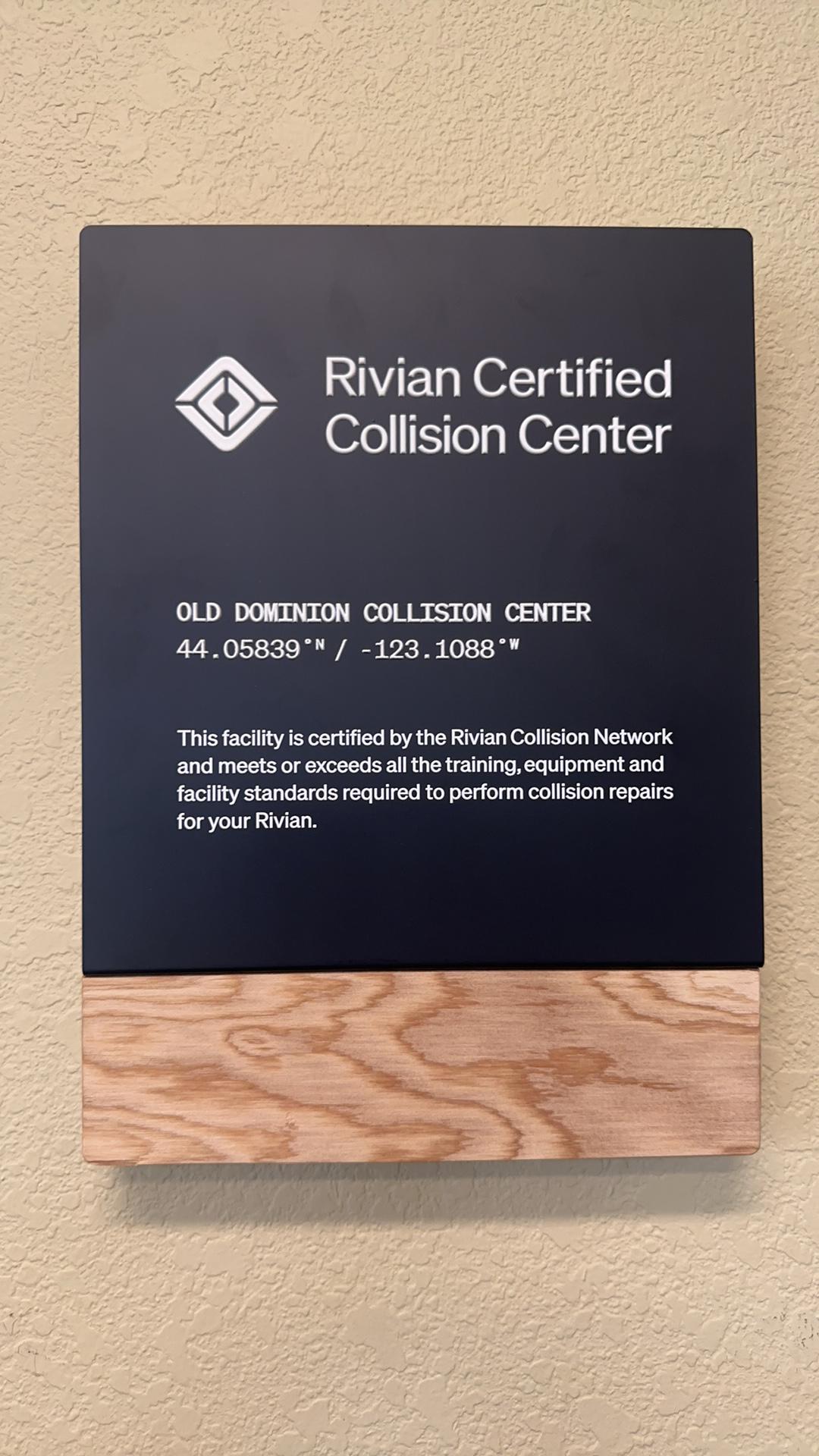
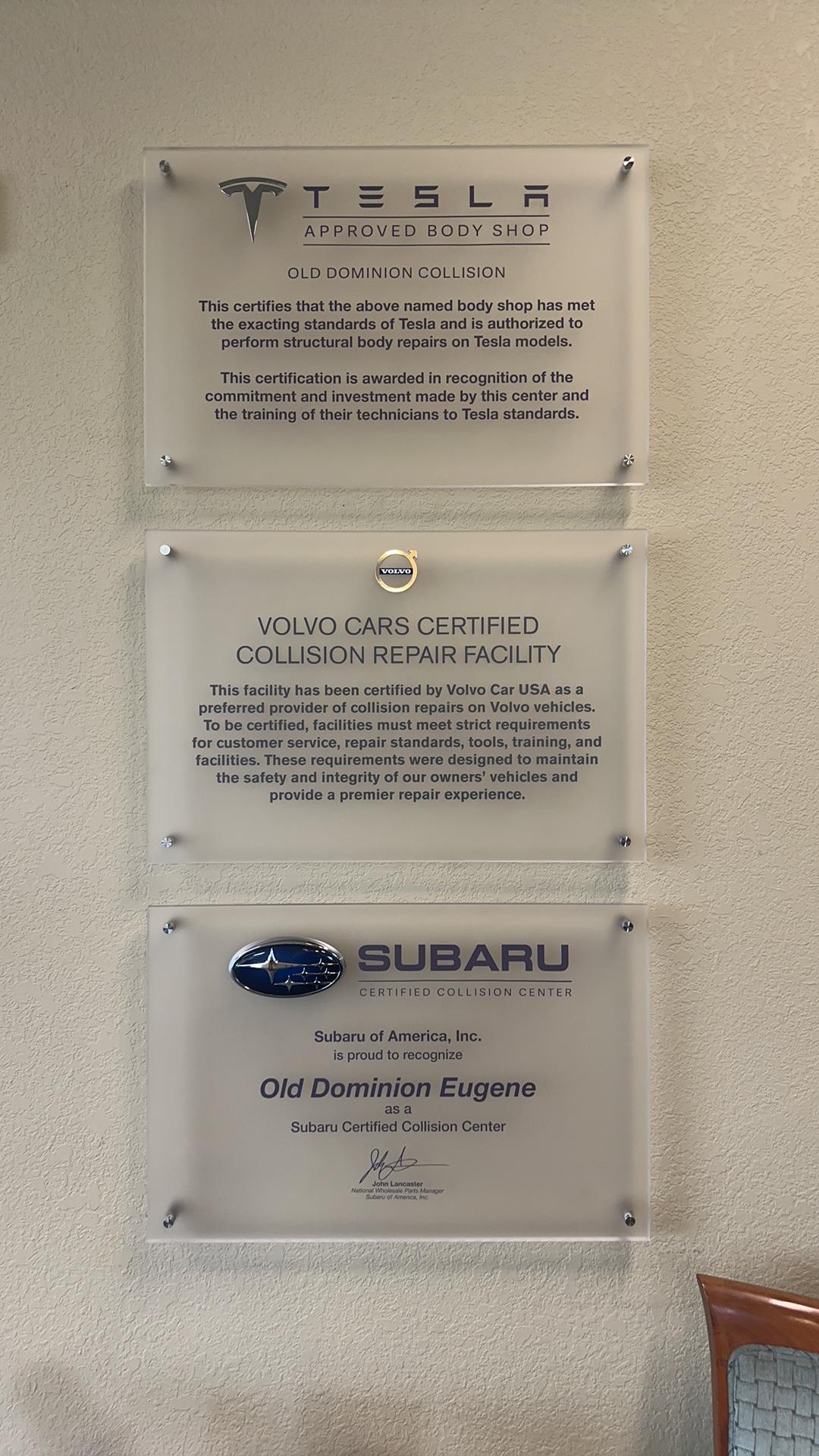
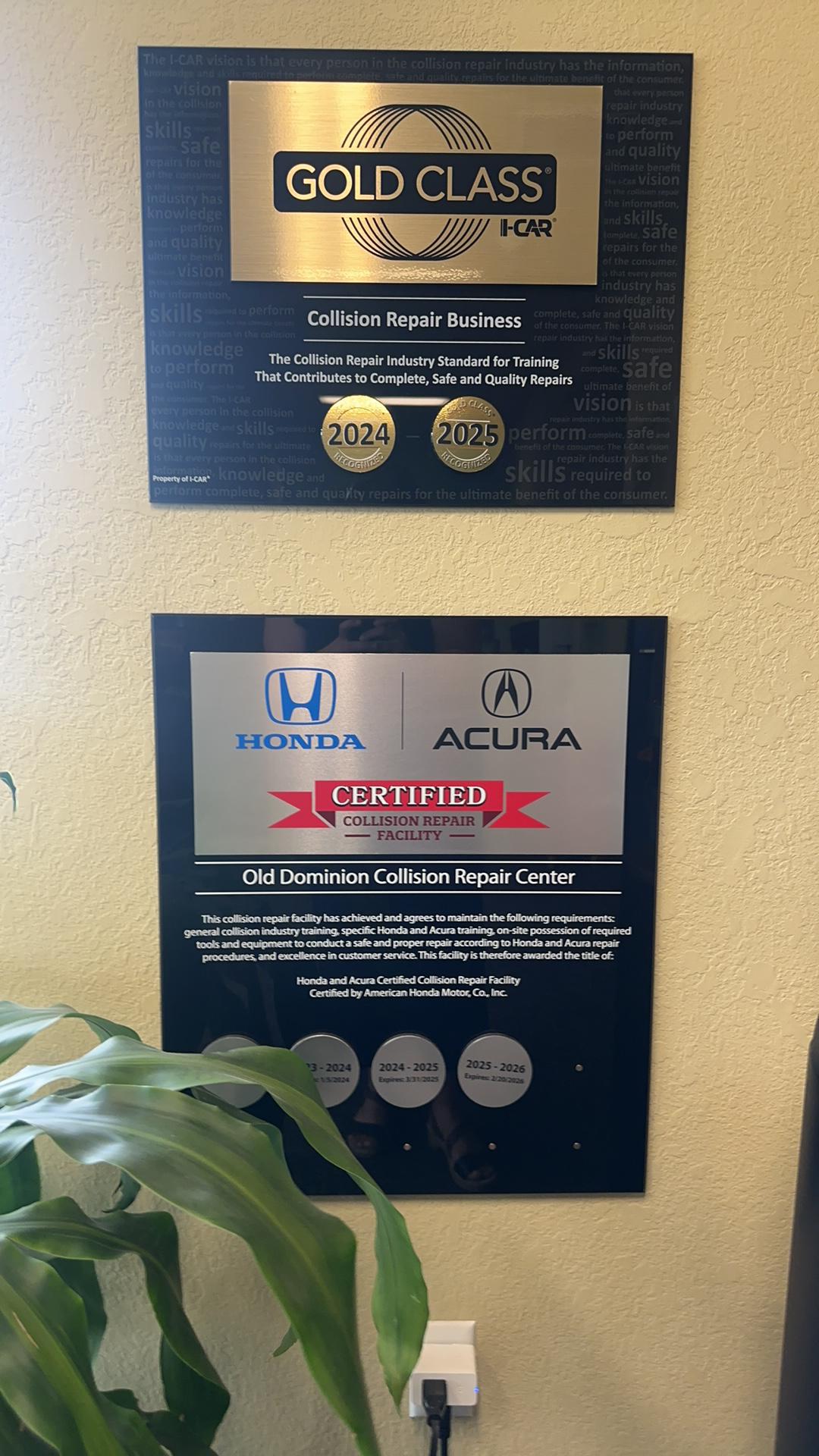
At Old Dominion Collision, we are proudly certified by Tesla, BMW, Rivian, Mercedes, Volvo, Subaru, Honda, and Acura. That means:
- Only OEM parts (never aftermarket)
- Manufacturer-trained technicians
- Up-to-date procedures and audits
- A commitment to repairing vehicles exactly as designed
Because when it comes to your safety and your investment, “good enough” isn’t good enough.

Final Thought
If your vehicle has been in an accident, don’t rely on marketing buzzwords like “approved.” Make sure you’re choosing a certified auto collision repair facility that has the training, equipment, and authorization from the automaker itself.
Recent Comments