
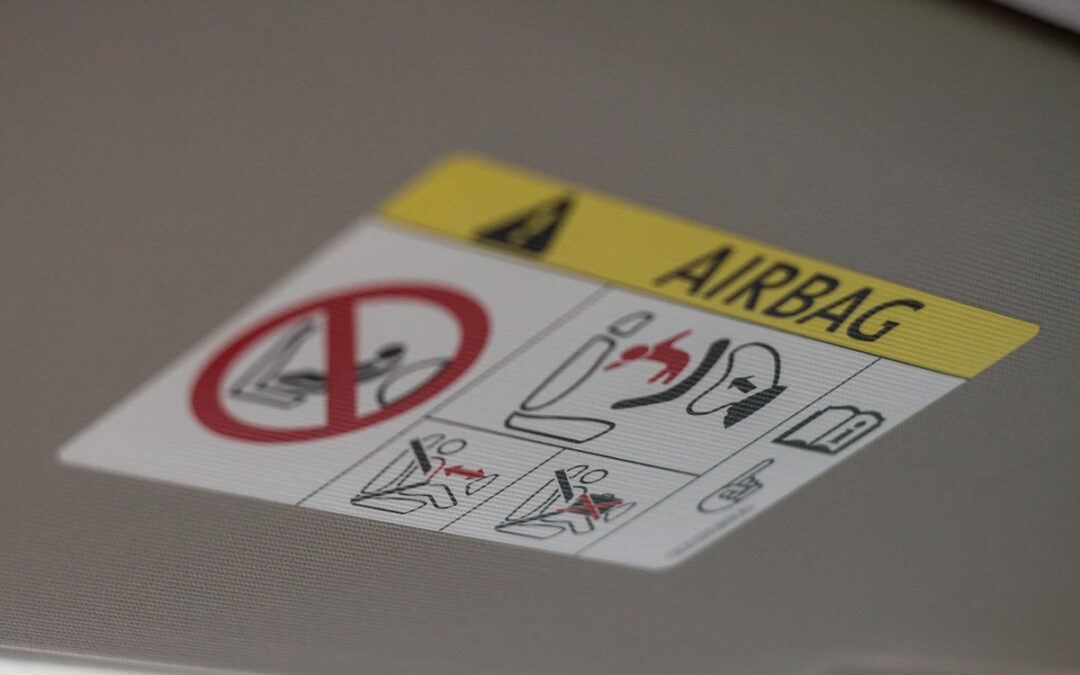
When people think about collision repair, they often picture paint, body panels, and making a vehicle look like new again. But some of the most important parts of a repair are the ones you may never see, especially car safety features like airbags, sensors, radar units, cameras, and other supplemental restraint system parts. These systems are not cosmetic. They are engineered to protect you and your family. They undergo rigorous crash testing to ensure they will function properly when a collision happens.
Understanding Modern Car Safety Features
Modern vehicles rely on a complex network of factory-designed parts that work together in a very specific way during a crash. An airbag is not just an airbag. It is part of an entire safety system that includes sensors, control modules, wiring, calibration targets, seat belt pretensioners, and more.
When one of those parts is replaced with anything other than the correct new, factory part, the consequences can be severe.
A Real-World Example of What Can Go Wrong
A recent legal case highlights exactly why this matters. In an article titled Family Files Suit Over Teen Killed by Improper Repair Involving Counterfeit Airbag, the allegations describe a tragic situation in which a teen lost her life after a counterfeit airbag allegedly exploded in what otherwise may have been a survivable collision.
The article states that the vehicle’s airbag system included “counterfeit, non-compliant, and defective components,” and that the result was catastrophic.
Why Proper Airbag Replacement Matters
One especially important passage explains the purpose of proper replacement after deployment:
“After being involved in a crash that causes the subject Hyundai Sonata’s front driver-side airbag to deploy, the front driver-side airbag module must be removed and replaced with a new module that complies with federal standards and Hyundai Motor Company’s designed specifications for the vehicle.”
That is exactly why proper repairs matter so much. Car safety features are designed by the manufacturer to perform according to specific standards. They are not areas where shortcuts, reused components, questionable sourcing, or counterfeit parts have any place.
NHTSA Warning on Defective Airbag Components
The article also includes this urgent warning from NHTSA:
“If a vehicle has been in a previous crash where the airbag deployed, it should be inspected immediately for one of these inflators, especially if it has a salvage or rebuilt title. If you find a DTN inflator, the vehicle should not be driven until the inflator is replaced with genuine parts.”
That guidance is clear. Genuine parts matter because safety matters.
It’s Not Just Airbags: The Role of ADAS and Sensors
The same principle applies beyond airbags. Radar sensors, blind spot monitors, forward collision sensors, lane keeping cameras, and ADAS components are all precision safety equipment.
These parts must not only be the correct parts, but they must also be installed and calibrated according to the manufacturer’s procedures. A vehicle may look repaired on the outside while critical systems are still compromised underneath.
Why New Factory Parts Are Critical
Using new, factory parts helps ensure:
- Proper fit and function
- Compliance with manufacturer design specifications
- Compatibility with the vehicle’s safety systems
- Reliable performance in a future collision
- Reduced risk of hidden failures or dangerous malfunctions
Safety Is the Standard, Not an Upgrade
For repairers, this is not just about parts selection. It is about responsibility. For vehicle owners, it is about knowing what questions to ask and choosing a repair facility that prioritizes safety over shortcuts.
At the end of the day, a proper repair is not just one that restores appearance. It is one that restores the vehicle’s ability to protect the people inside it.
When it comes to airbags, sensors, radars, and other critical car safety features, new factory parts are not a luxury. They are the standard that safety demands.
Recent Comments